

While healthcare companies consider and re-consider the potential advantages and risks around cloud computing, their competitors are evaluating cloud solutions or probably already adopting them. Over the next few years, those companies, which fail to seize the cloud opportunity will be losing the competitive power—which will quickly lead to lost customers and market share.
The healthcare industry’s transformation to cloud is inevitable and migration to cloud requires usage of mobile devices and applications that provide secure access to patients’ information. It is time for healthcare players to embrace this transformation—to ensure that when the game changes, it happens in their favor.
Read below our 4 ways how cloud computing in combination with mobility will change the game in the healthcare industry.
- Creating the agility for health providers and insurers to flex their business models —and deliver better patient services
Companies need greater agility to adapt to change at high speed and low cost. Cloud computing will bring this, enabling healthcare related businesses to adapt their business models having security as priority in mind: as the flood of patient data needs to be securely shared with healthcare providers. With recent increased demand for more control over health data more interaction between the different aspects of healthcare need to be provided. Applications and associated technologies such as direct secure messaging are already moving to SaaS delivery models to meet growing demands. This move helps extend reach and effectiveness and meets the challenge of managing unprecedented volumes of data.
- Helping ensure seamless, personalized healthcare anywhere in the world via universal and secure data sharing
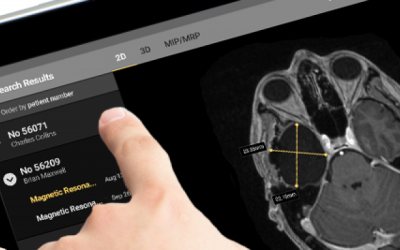
Crucially, access to personal medical data will not be limited to an individual’s general practitioner (GP) or local hospital, but can be instantaneous for anyone who needs it—emergency center, paramedic, nurse or other professional. At the same time, medical scan images would be shared via cloud platforms in real time with top specialists anywhere in the world, enabling diagnosis and recommendations overnight. Courses of treatment and outcomes could also be monitored anywhere in the same way.
- Shifting treatment of chronic healthcare from the hospital or clinic to the home
In the future, cloud solutions will enable healthcare providers to use remote mobile diagnostic devices in patients’ homes, linking them to cloud platforms, and monitor their condition with applications, including cloud-based predictive analytics. Rising adoption of such solutions will reduce the need for healthcare professionals to travel, saving providers, insurers and patients’ time and money.
- Develop access to health services without heavy investment in physical hospitals and clinical centers via cloud
In many emerging markets—and especially in remote rural areas—healthcare infrastructure and services are very rudimental if not non-existent and people have very little access to qualified health advice and treatment. However in those markets more and more people have an internet-connected smartphone. By linking these and other smart devices to a cloud platform, emerging markets will be able to bypass the stage of physical infrastructure in health, and transform people’s access to good healthcare. While healthcare companies consider and re-consider the potential advantages and risks around cloud computing, their competitors are evaluating cloud solutions or probably already adopting them. Over the next few years, those companies, which fail to seize the cloud opportunity will be losing the competitive power—which will quickly lead to lost customers and market share.
Share this article
More News & Highlights
Healthcare Mobility: The new perspective for Patient Care
Health care is transforming to mobile communication A recent study showed that by 2015 30% of all smartphone users are expected to use “wellness apps,” and that mobile devices (smartphones in particular) will be the most popular device among doctors since the...

Sqilline showcase benefits of SMART DI at the 11th National Conference e-Health
Sqilline will take part in the 11th National e-Health Conference, presenting in the second panel entitled“Hospital information systems (HIS) in support holistic e-healthcare”. The panel will cover topics such as centralized management of medical facilities,...

Internet of Things (IoT) is not a buzzword or a temporary phase!
“By 2020 IoT is expected to connect 38 billion “things” to the internet, ranging from wearable devices such as smartwatches to automobiles, appliances, and industrial equipment”, a latest research from Harvard Business Review states. That is an increase of...
Products
Solutions
Insights